03 · Two wheels
Motorcycles on Bulgarian roads
Published · Updated · About 15 minutes of reading
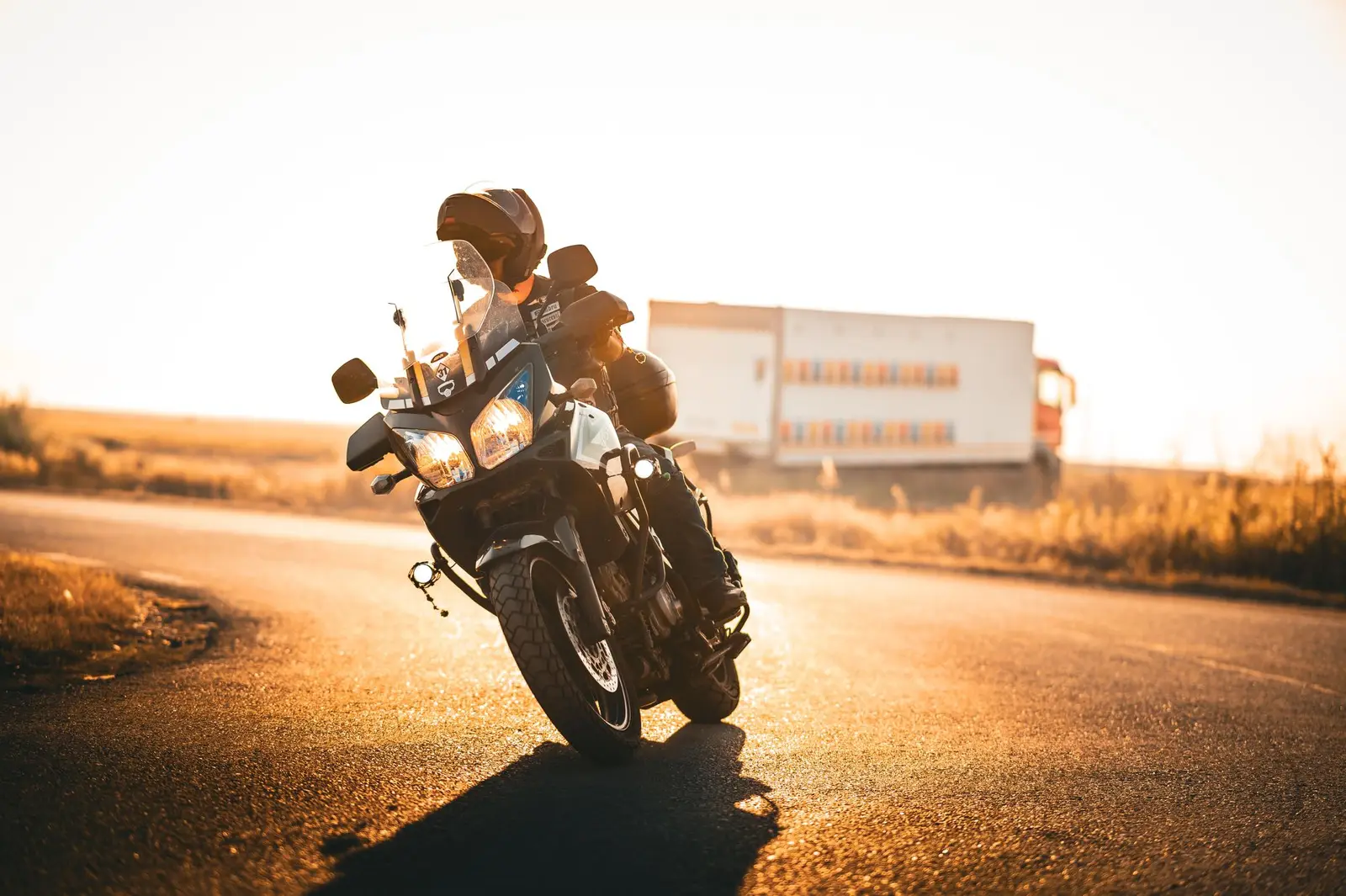
A motorcycle in Bulgaria is not a small car. The general speed table gives it lower limits, and the vignette rules, as written, do not charge vehicles with fewer than four wheels. Both points are easy to miss if you only remember the car’s 140 km/h and the car’s e-vignette.
The notes below are for a rider who already knows the machine. They are not a training course, and they do not say that a particular pass is in good condition today.
Limits, then the road
On the government information page on national traffic rules (opens in a new tab, outside bgtol), category A is listed at 50 km/h in a built-up area, 80 outside, 90 on an express road, and 100 on a motorway. A car beside you may be within its own limit at a speed that is already over yours. That gap is largest on the motorway, where the car’s general limit is 140.
One hundred on a motorway is still a high speed on two wheels if the surface is wet, if a lorry is throwing spray, or if you are tired. The limit is a ceiling. Wind on an open section, a crosswind on a viaduct, and a dirty patch of diesel near a fuel exit are ordinary reasons to sit lower.
The vignette, and the four-wheel line
The government page says vignette fees are not paid for road vehicles with fewer than four wheels. A solo motorcycle, and a three-wheeled machine, fall on that side of the line. A quad or any other vehicle with four wheels can fall on the other side even if it feels like a motorcycle to the rider. Read the charges guide before you assume an exemption, and confirm on the toll operator’s website (opens in a new tab, outside bgtol) if the category of the actual vehicle is unclear. bgtol cannot look it up.
Insurance is separate. The exemption from a vignette is not an exemption from a licence, a helmet, or third-party cover.
Where you sit in the lane
Ride in a lane, where you can be seen, not in the gap between lanes of slow traffic. Do not assume filtering is permitted because it is common somewhere else. If you are unsure, stay in the lane and wait.
Helmets are required for the rider and a passenger. Visor, gloves, and a jacket you can actually crash in matter more on a mountain road than they do in a photograph. At the end of a motorway the surface often changes: gravel at the edge, polished asphalt, agricultural crossings, and patches. The network page is the map of where that change happens. Struma’s unfinished gorge section and the Hemus gap are the two that catch riders who planned a motorway day.
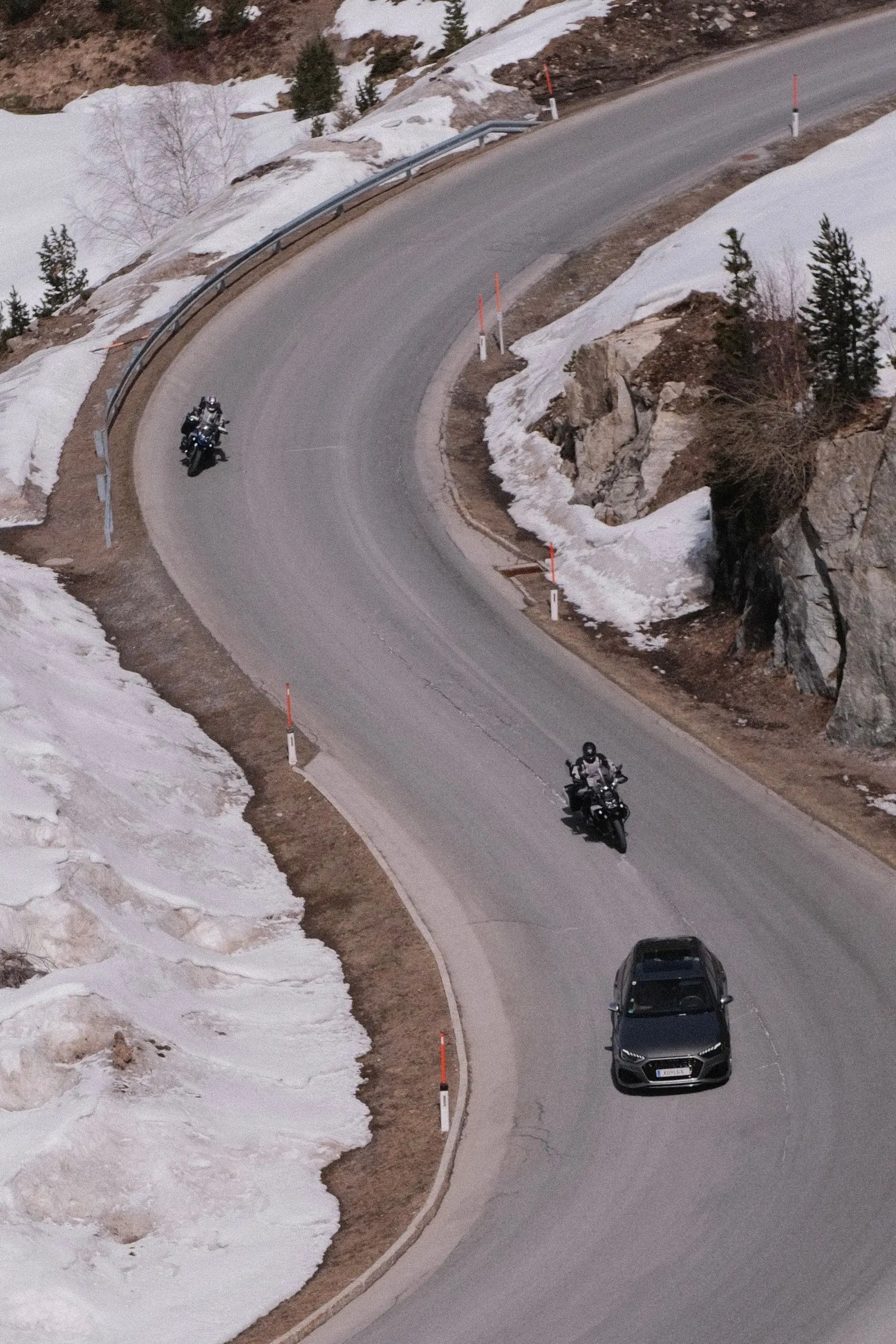
Group riding needs a meeting point that is not the hard shoulder, and an agreement about who waits. Headlight signals are a poor substitute for indicators. On a hairpin, a bus or a lorry coming up needs the whole lane. The photograph beside this text is an illustration of a mountain road, not a Bulgarian pass.
Cold, heat, and animals
From 15 November to 1 March the Road Traffic Act expects tyres suited to winter conditions, or tread of at least 4 mm. A motorcycle is a bleak way to meet a closed pass. Shipka, Troyan, and Petrohan can be wet or shut while Sofia is only grey. The winter guide is the longer note. In summer the opposite problem is heat off the asphalt and not enough water, especially if you leave the motorway for a slow first-class road.
At night on second- and third-class roads, animals and unlit junctions are the ordinary hazard. Use lights. If you are too cold to feel the levers properly, stop in a proper place and warm up.
A useful next page is signs and priority, then planning a drive if the group is crossing the country.